Milk Skimmer & Profitability in KENYA

Industrial Cream Separator Business Case for Kenya
MILK SKIMMER AND PROFITABILTY KENYA
Here is a clear, structured breakdown of the Industrial Cream Separator Business Case for Kenya. The original operational data, mass balance yields, financial models, and product comparison strategies are organized below with visual charts to support your planning.
Executive Summary & Core Concept
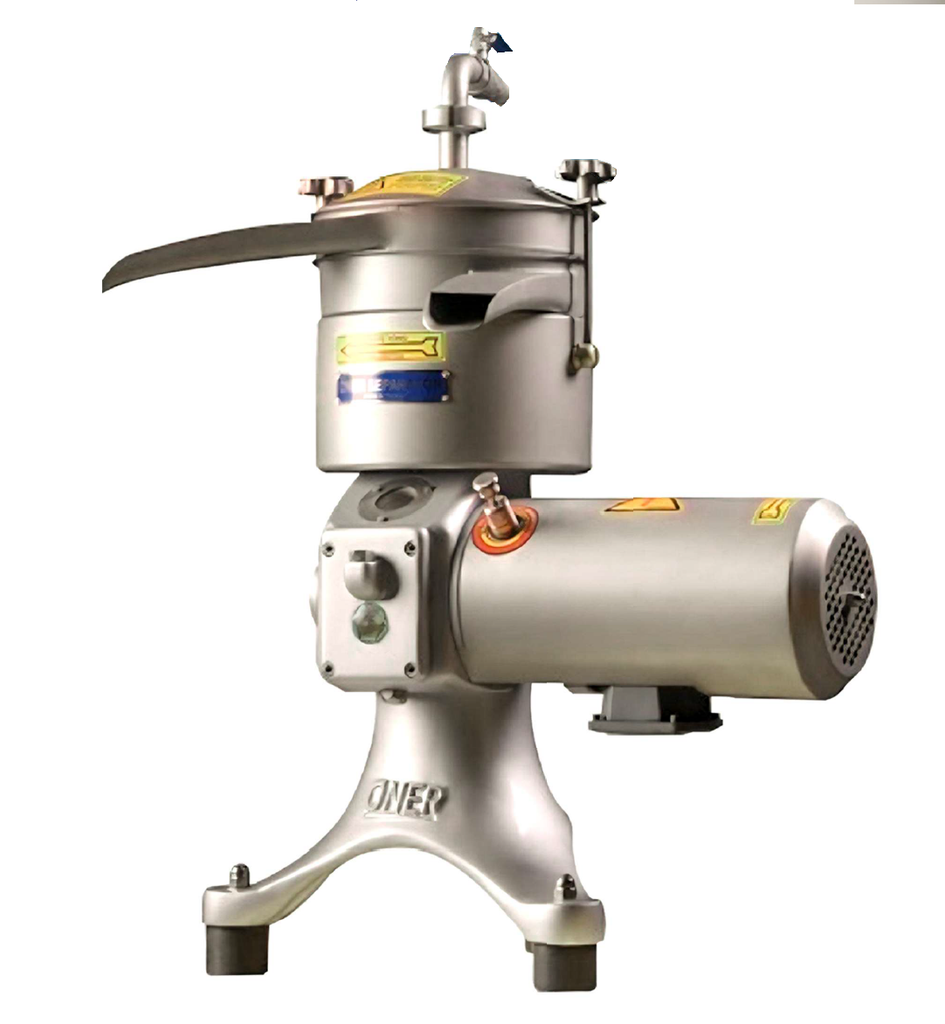
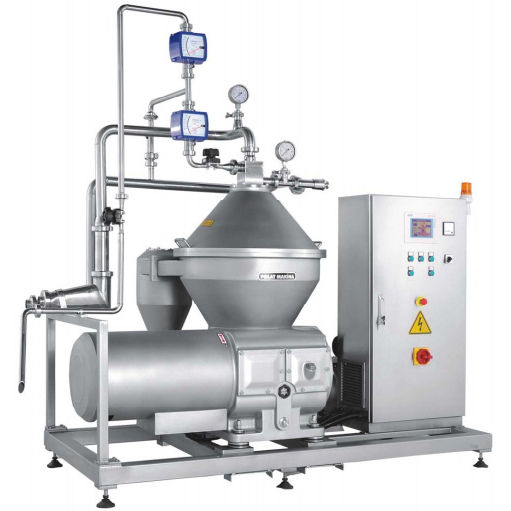
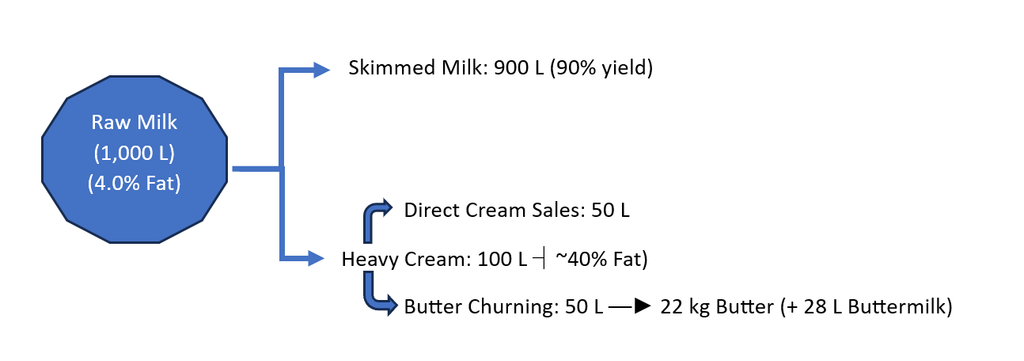
An industrial centrifugal cream separator splits 1,000 liters/day of raw whole milk into skimmed/toned milk and heavy cream. A portion of the cream is churned into fresh butter, establishing three distinct revenue streams from one raw input:
- Skimmed / Toned Milk (900 Liters / 90% yield)
- Fresh Heavy Cream (50 Liters direct sale)
- Fresh Butter (22 kg produced from remaining 50 L cream)
- Daily Mass Balance Breakdown (1,000 L Raw Milk)
When processing 1,000 Liters of Raw Milk per day at standard 4% milk fat:
1.Daily Mass Balance Breakdown (1,000 L Raw Milk)
2.Kenya Local Market Financial Model (KES)
Based on Kenya benchmark prices (Procurement KES 50/L; Skim KES 75/L; Cream KES 550/L; Butter KES 1,200/kg):
Daily & Monthly Profitability (30 Operating Days)
3.Capital Expenditure (CapEx) & Payback Analysis
Assuming existing facility infrastructure (cooling tanks, churns, piping) and adding only the Industrial Cream Separator:
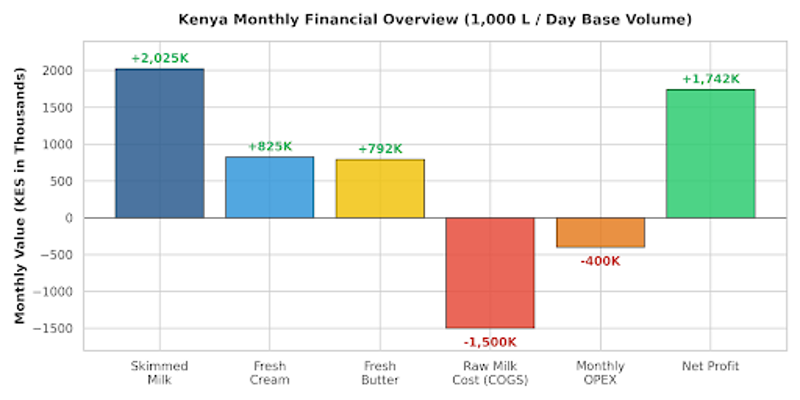
| Stream / Expense Category | Daily Volume / Qty | Unit Price (KES) | Daily Total (KES) | Monthly Total (KES) |
| Skimmed / Toned Milk | 900 L | KES 75 / L | KES 67,500 | KES 2,025,000 |
| Fresh Heavy Cream | 50 L | KES 550 / L | KES 27,500 | KES 825,000 |
| Fresh Butter | 22 kg | KES 1,200 / kg | KES 26,400 | KES 792,000 |
| Gross Revenue | — | — | KES 121,400 | KES 3,642,000 |
| Raw Milk Procurement (COGS) | 1,000 L | KES 50 / L | -KES 50,000 | -KES 1,500,000 |
| Gross Operating Profit | — | — | KES 71,400 | KES 2,142,000 |
| Monthly OPEX (Labor, Utilities, Packaging, Logistics) | — | — | — | -KES 400,000 |
| Net Operating Profit | — | — | — | KES 1,742,000 |
- Cream Separator Investment: KES 1,950,000 (~$15,000 USD)
- Monthly Net Profit: KES 1,742,000
- Simple Payback Period:
- 1-Year ROI:
- 6-Month Payback Break-Even Volume: Processing ~293 to 300 Liters/day covers all local OPEX and fully repays the KES 1.95M separator within 6 months.
4. Product Strategy: Butter vs. High-Fat Cultured Yogurt (Maziwa Lala)
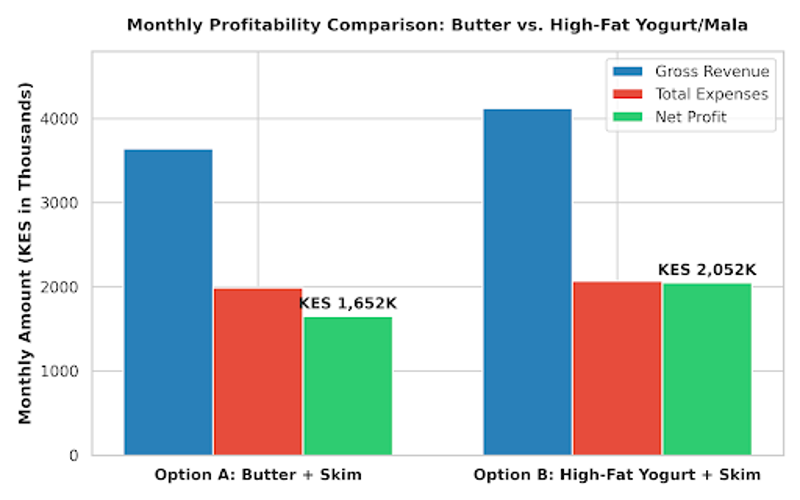
Converting cream into High-Fat Cultured Yogurt / Sweetened Maziwa Lala generates ~24% higher net monthly profits than churning it into butter.
- Butter Churning (Option A): Leaves behind ~56% of cream weight as lower-value buttermilk.
- High-Fat Yogurt / Lala (Option B): Blends cream directly back into milk solids, capturing 100% volume into high-margin consumer products.
| Metric | Option A: Butter + Skim Milk | Option B: High-Fat Yogurt/Mala + Skim Milk |
| Gross Monthly Revenue | KES 3,642,000 | KES 4,122,000 |
| Total Expenses (COGS + OPEX) | KES 1,990,000 | KES 2,070,000 |
| Net Operating Profit | KES 1,652,000 | KES 2,052,000 |
| Net Profit Margin | 45.36% | 49.78% |
5.Technical Reference: Cream & Butter Yield Relationships
- Inverse Yield Rule: As the fat concentration in the end product increases, total output yield decreases, but product richness and shelf life improve.
- 1,000 L Milk at 3.5% Fat = 35 kg Total Fat Base:
- Light Half Cream (10–18% Fat): Yields 194.4 – 350.0 kg
- Whipping Cream (30–35% Fat): Yields 100.0 – 116.7 kg
- Standard Commercial Butter (80–81% Fat): Yields 43.21 – 43.75 kg
- Clarified Butter / Ghee (99–99.8% Fat): Yields 35.07 – 35.35 kg (near 100% pure fat extraction)
Strategic Recommendations for Operations in Kenya
- Maintain Chilling Speed: Skimmed milk spoils rapidly after separation; cold-chain reliability is vital to prevent spoilage.
- Buffer Seasonality with Butter: Fresh cream has a short shelf life. Frozen butter can be stored for 6–12 months, serving as a buffer against market price fluctuations.
- Implement Component Pricing: Pay farmers based on milk fat percentage rather than flat liquid volume to protect separator yields.
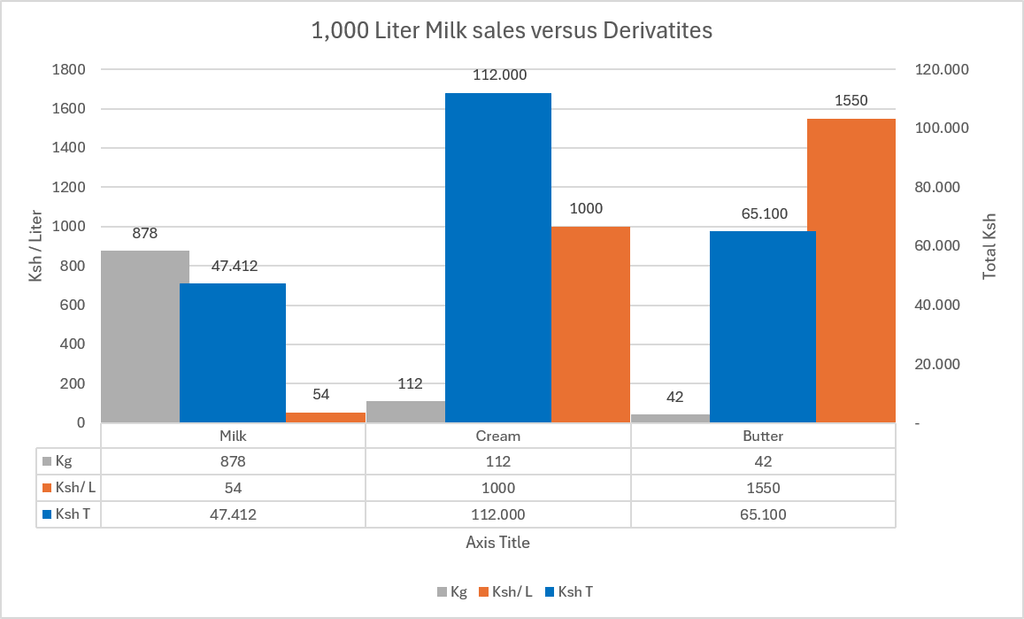
COGS : Cost of Goods Sold Link