Jersey vs Holstein- Friesian
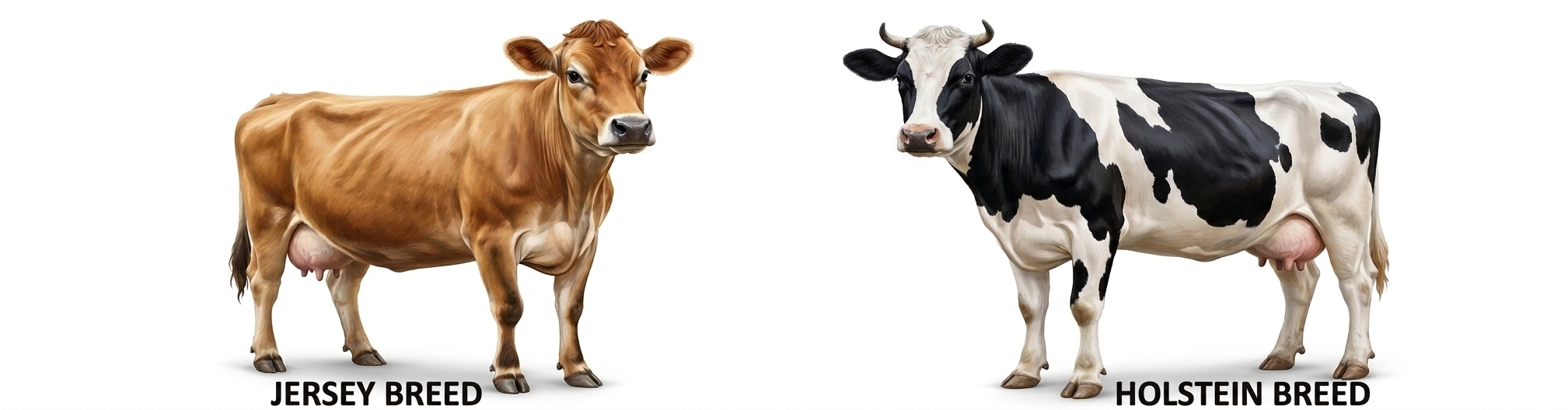
Jersey milk has a significantly higher concentration of nutrients, while Holstein milk contains a higher percentage of water, making it the industry standard for fluid volume.
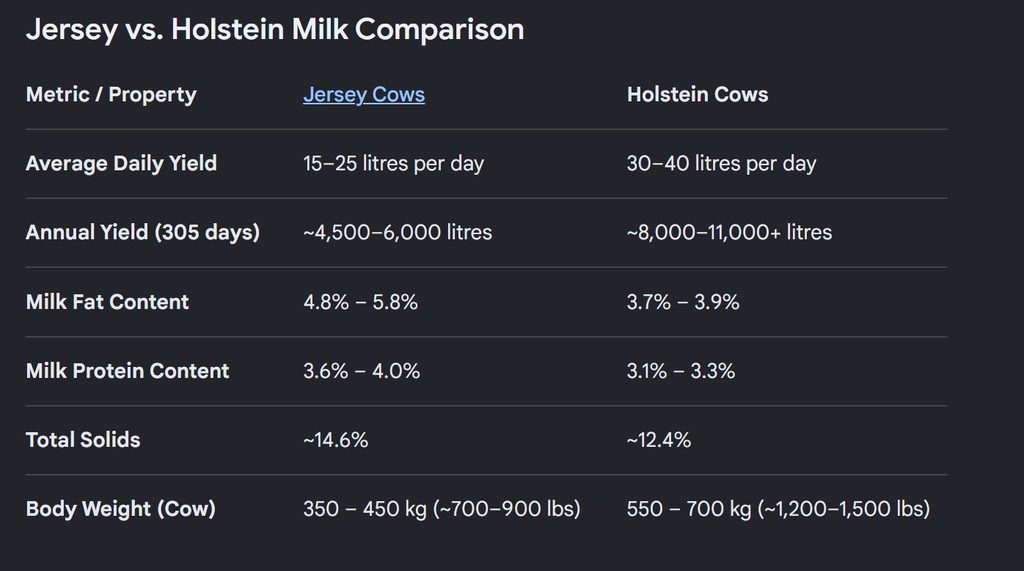
The chart below compares the average milk composition percentages for both breeds:

- Butterfat Advantage: Jersey milk contains about 6.0% butterfat compared to the Holstein average of 4.7%. This high fat content gives Jersey milk its signature creamy texture and makes it highly prized for butter and cheese production.
- Protein Content: Jersey milk averages 3.9% protein, while Holstein milk sits around 3.2%. This higher protein concentration (specifically casein) yields more cheese per gallon of milk.
- Total Solids: When combining fat, protein, and lactose, Jersey milk delivers roughly 14.2% total solids compared to Holstein’s 12.1%, meaning you get substantially more nutritional density per glass.
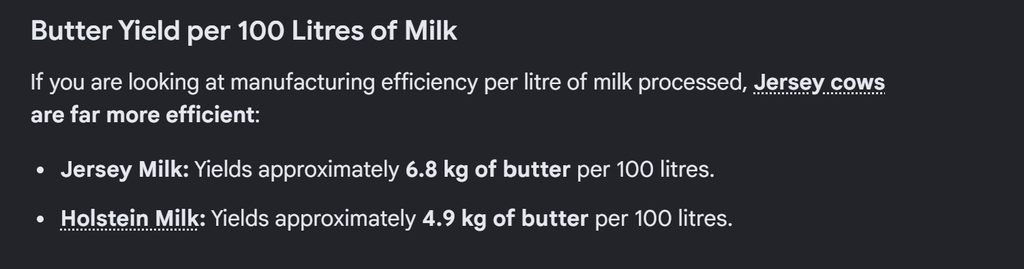
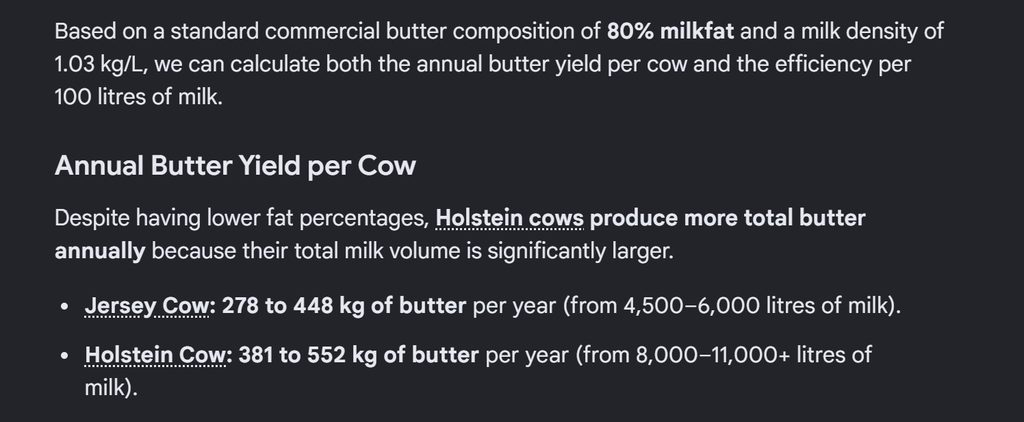
Butter Efficiency per liter
Milk Production Volume
- Holstein Yield: Holsteins produce the highest milk volume globally, averaging 30 to 50 liters or more per day.
- Jersey Yield: Jerseys produce a lower volume, averaging 15 to 25 liters per day, but yield more milk solids per pound of body weight.
Jersey Vs Holstein-Friesian comparisons
Annual turn over or total revenue of Holstein is much more ahead of
Finally Which Breed Fits Your Goals?
Choose Holsteins if: You sell fluid milk to a commercial processor that pays primarily by volume, or if your main goal is to maximize total farm output tonnage. And if your aim to make business profit. But these animals are sensitive to environmental fluctuations and highly recommended zero grazing management.
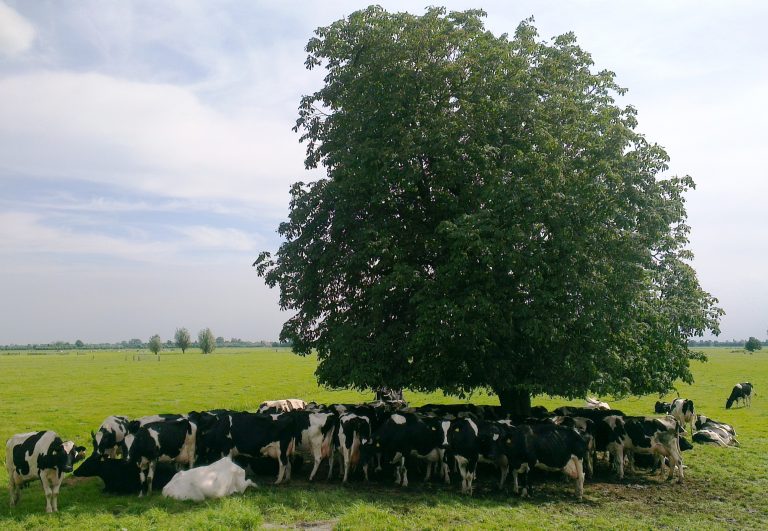
Choose Jerseys if: You are focusing on manufacturing efficiency (making cheese, butter, or yogurt), want better feed-to-milk conversion ratios, or have less acreage for grazing. Good for small scale family farms. Durable and good for open grazing in meadows
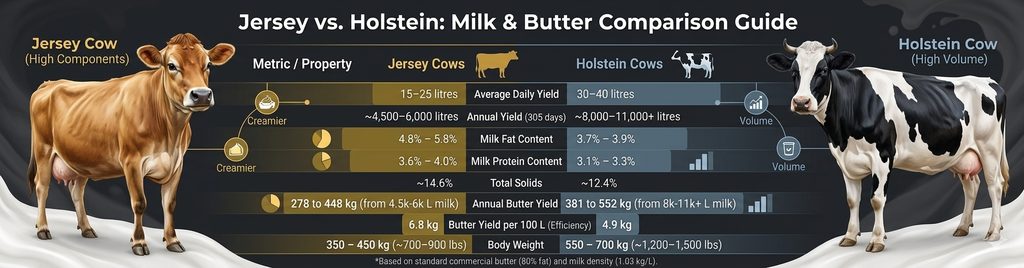
| Metric / Property | Jersey Breed 🟤 | Holstein Breed ⚫⚪ |
|---|---|---|
| Primary Advantage | High component density (creamy milk) | Massive fluid volume production |
| Average Daily Yield | 15 – 25 liters per day | 30 – 40 liters per day |
| Annual Yield (305 days) | ~4,500 – 6,000 liters | ~8,000 – 11,000+ liters |
| Milk Fat Content | 4.8% – 5.8% | 3.7% – 3.9% |
| Milk Protein Content | 3.6% – 4.0% | 3.1% – 3.3% |
| Total Solids | ~14.6% | ~12.4% |
| Butter Yield per 100L | ~6.8 kg of butter | ~4.9 kg of butter |
| Annual Butter Yield | 278 – 448 kg per year | 381 – 552 kg per year |
| Average Body Weight | 350 – 450 kg (~700–900 lbs) | 550 – 700 kg (~1,200–1,500 lbs) |
Holsteins require intensive volume management, Jerseys demand careful metabolic and physical care
he critical limitations and challenges for each breed include:
Jersey Breed Constraints
- High Risk of Milk Fever (Hypocalcemia): Jerseys have the highest genetic risk for milk fever immediately after calving due to their high milk-fat production draining calcium rapidly.
- Low Market Value for Male Calves: Jersey bull calves are small and carry very little beef value, making them difficult to sell or market in standard commercial livestock systems.
- Milking Equipment Sensitivity: Their smaller stature and smaller teat sizes mean they require specialized equipment settings or precise cup sizes to prevent injury during milking.
- Fragile Calves at Birth: Jersey calves are born quite small (~25 kg / 55 lbs) and are more vulnerable to severe weather or drafts in their first few weeks compared to Holstein calves.
Holstein Breed Constraints
- Massive Nutritional & Intake Demands: Because of their huge frame and heavy milk output, Holsteins have extremely high feed and water overhead costs. They easily consume 90–110 kg of forage and over 60 liters of water daily.
- Heat Stress Vulnerability: Holsteins suffer severely in warm, humid climates. Their milk production drops sharply when temperatures rise, requiring expensive fans or cooling mist infrastructure.
- Shorter Productive Lifespans: On average, commercial Holsteins face higher culling rates due to fertility issues and lameness, giving them a shorter lifespan in intensive operations (often around 3 to 4 lactations).
- Higher Veterinary Costs: Their large body mass requires larger doses of medications. They are also physically prone to conditions like abomasal displacement (twisted stomach) and mastitis.
Direct Comparison Summary
| Constraint Factor | Jersey Cows 🟤 | Holstein Cows ⚫⚪ |
|---|---|---|
| Primary Health Vulnerability | Post-calving Milk Fever | Mastitis, Foot Lameness, and Twisted Stomach |
| Climate Sensitivity | Thrives well in heat | Suffers easily from Heat Stress |
| Calf/By-Product Value | Low beef value for male calves | Moderate beef/veal market value |
| Management Risk | Metabolic monitoring at calving | Feed supply drops or heat waves |
Business vise
From an investment perspective, Holstein cows generally generate more total annual profit per cow in large-scale commercial operations, but Jersey cows often deliver a better return on investment (ROI) per acre or dollar spent on feed.
Comprehensive dairy research, including studies from Cornell University and published in the National Institutes of Health (NIH), shows that Holstein cows average $345 to $601 more profit per cow annually than Jersey cows.
Dilution of Fixed Costs: A Holstein cow occupies the same stall and takes up the same time in a milking parlor as a Jersey cow. Because the Holstein produces a significantly greater sheer volume of milk, she dramatically dilutes the farm’s fixed operational overhead per liter.
Total Output: Even though Jersey milk is dense in nutrients, Holsteins produce so much more total volume that their total output of absolute solids (fat and protein combined) still surpasses Jerseys by hundreds of pounds per year.
The Efficiency Case: Why Jerseys Can Be More Capital-Efficient
If you are operating under specific capital or resource constraints, Jerseys offer strategic investment advantages noted.
Higher Stocking Density: Because Jerseys are smaller, you can fit more cows onto the same acreage or inside the same barn footprint compared to Holsteins.
Better Longevity and Fertility: Jerseys generally mature faster, have higher conception rates, and maintain a longer productive life, reducing your long-term herd replacement costs.
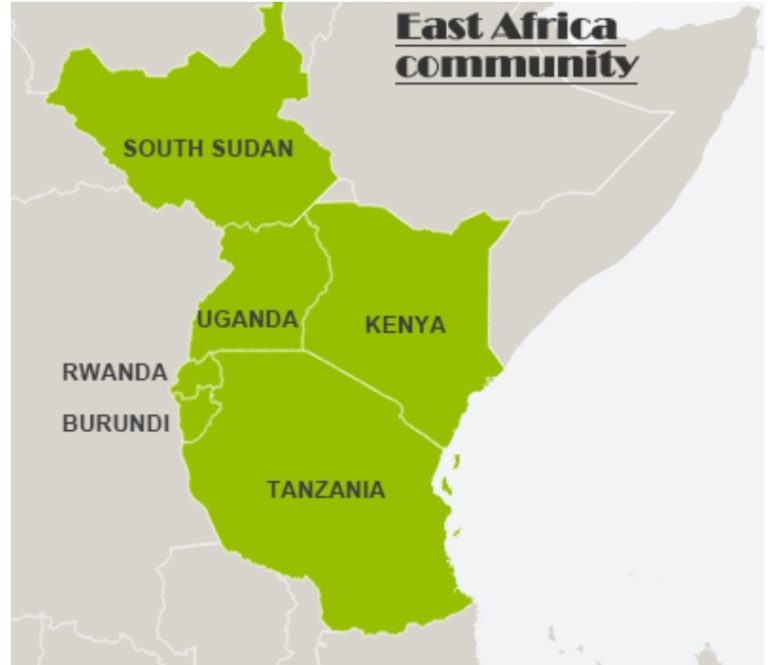
IN KENYA
When investing in Kenya’s dairy sector, the question of profitability boils down to your geographic location, land size, and how you intend to sell the milk.
Generally, Holstein-Friesians are more profitable for large-scale investments in cool highland regions, while Jerseys deliver a better return on investment for smallholders or farms in warmer areas.
A comprehensive strategic analysis of how both breeds perform under Kenyan market conditions highlights the following key considerations:
1. Market Pricing Structures in Kenya
- The Volume Reality: Most major processors in Kenya (such as Brookside, New KCC, and local dairy cooperatives) pay farmers primarily based on kilograms or liters of fluid volume delivered, rather than a strict component pricing system based on butterfat.
- The Winner: Because the Kenyan market rewards sheer quantity, the Holstein-Friesian (capable of yielding 25–40+ liters daily under good management) offers an immediate economic advantage over the Jersey (15–25 liters).
2. Location and Climate Adaptability
- High-Yield Zones (Central Highlands & Rift Valley): If your investment is located in cooler regions like Kiambu, Nyandarua, Kericho, or Uasin Gishu, the Holstein-Friesian is highly profitable. These areas allow you to grow high-quality fodder (like corn silage, lucerne, or Boma Rhodes) to meet the intense nutritional demands of the breed.
- Warm or Semi-Arid Zones: If you are investing in warmer regions (like parts of Eastern, Coastal, or Lower Rift Valley), Holsteins suffer heavily from heat stress and their milk production crashes. In these climates, Jerseys are significantly more profitable because of their excellent heat tolerance and disease resistance.
3. Operational Costs (Feed and Acreage)
- Holstein Constraints: Holsteins require a high capital layout for daily management. They consume roughly 90–110 kg of fresh forage daily and require premium commercial dairy meal to reach their peak production potential. If feed supply chains drop, their output drops instantly.
- Jersey Efficiency: Jerseys consume roughly 30% less feed (65–85 kg of fresh forage). If land availability is limited or you are practicing zero-grazing on a smaller plot, you can stock more Jersey cows per acre, offering higher capital efficiency.
Investor Decision Matrix for Kenya
| Investment Scale / Focus | Most Profitable Breed | Strategic Rationale |
|---|---|---|
| Large-Scale Commercial (Highlands) | Holstein-Friesian ⚫⚪ | Maximizes bulk daily tonnage to major processing plants. |
| Value-Addition Business (Cheese, Butter, Yogurt) | Jersey 🟤 | High butterfat (4.8%–5.8%) drastically lowers production costs for premium dairy products. |
| Small-to-Medium Farm (Limited Land) | Jersey 🟤 | High feed conversion efficiency reduces expensive feeding costs per unit of body mass. |
(Note: Many commercial investors in Kenya also look closely at Ayrshire genetics or Fleckvieh crosses as a balanced middle-ground for hardiness and yield). [1]