Compost and fertilizer
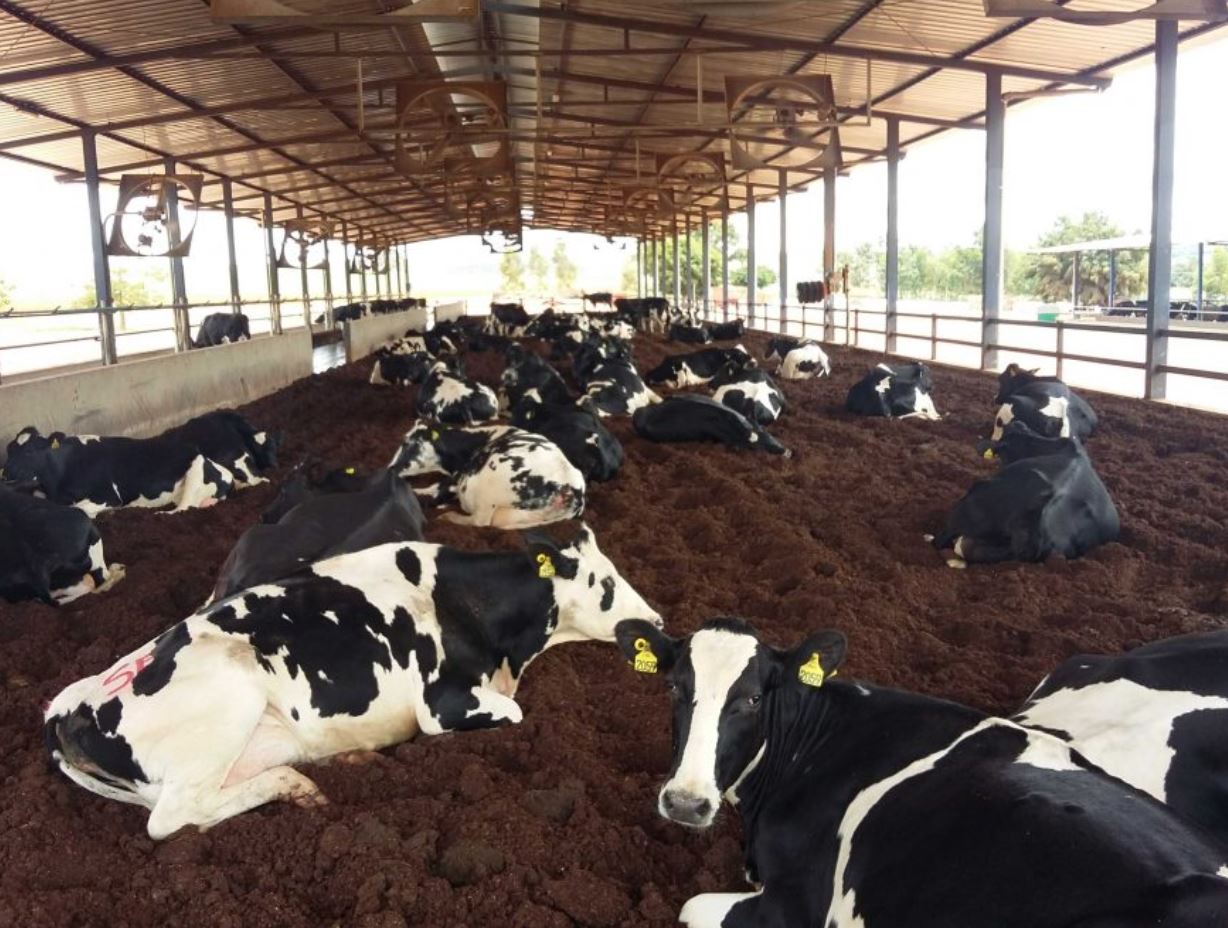
Various scientific studies have been conducted on the bedding material in barns, focusing on both organic and inorganic materials such as composting animal litter. Composting animal litter, being highly sensitive to moisture and humidity, is suitable for dry and hot climates. A composting barn provides cows with more space to move around than tethered or free-standing stalls. These barns can also reduce manure storage costs and space, saving on labor and manure processing.
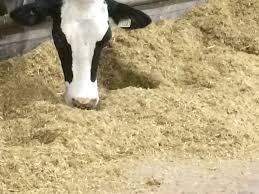
Compost as animal bedding and litter
Compost can be defined as the transformation of organic waste into a soil-like substance through decomposition. Composting is the process of recovering and reusing the biodegradable portion of organic waste. It is also a product with high soil-improving properties and fertilizer value.
Shelters with compost substrate
Compost-based shelters are similar in structure to deep-bed, free-range shelters. However, they have significant differences in principle and application. Therefore, research on the advantages, design, and management of compost-based shelters reveals their benefits and disadvantages.
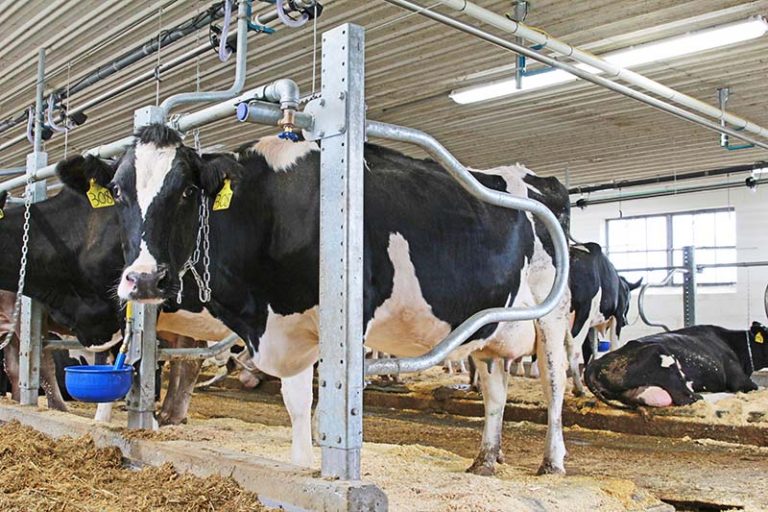
In shelters with compost bedding, animals are more comfortable because there are no stalls. They lie down more and can more easily perform lying-down and standing-up behaviors. The free space per animal increases, and this area can be approximately three free stall spaces. In this space, cows can choose their desired lying position.
Advantages of compost substrate
When standing, they come into contact with a much softer surface than concrete. Consequently, knee and foot lesions are less common, and the incidence of mastitis decreases in well-managed compost bedding systems. It has been reported that mastitis cases, which are very common in free-standing shelters with deep straw bedding, are less frequent in shelters with compost bedding. Since the animals can walk more easily on a comfortable surface, they can also show signs of estrus. Thus, the estrus detection rate increases.
On the other hand, it is noted that there is less odor and fewer flies in shelters with compost litter. Composted manure becomes more valuable agriculturally, and manure storage costs decrease.
Disadvantage of compost substrate
In addition to these advantages, compost-based barns also have some disadvantages. First of all, they require 8-10 m2 of space per cow, which is at least twice as much as stall barns. The cost of organic material used for composting can be high. Labor and energy are needed for daily mixing of the bedding. Ammonia emissions can be high due to the large resting area and frequent ventilation. There may be difficulties in obtaining suitable bedding material.
The most important difference between shelters using compost bedding and Israeli-style shelters is that the manure is composted without being dried. While Israeli-style shelters require 22 square meters per animal, compost bedding requires only 8 square meters. In compost bedding, a 20 cm thick layer of sawdust is added on top of the manure every 10 days, and it is aerated by turning it over twice a day.
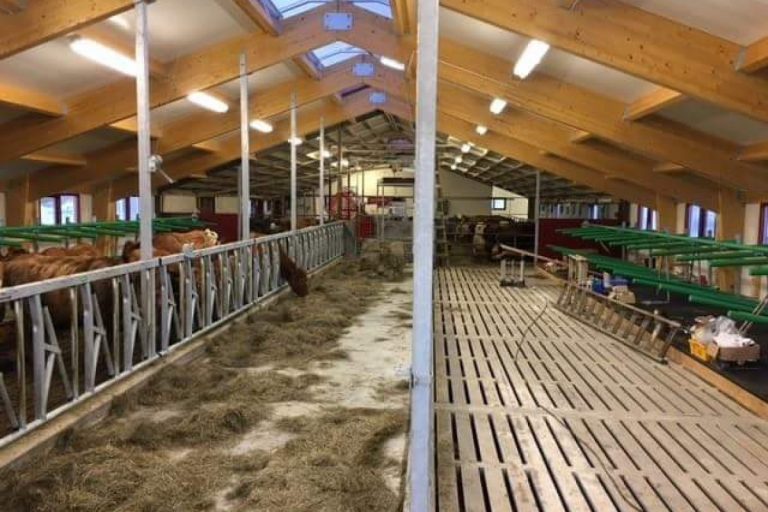
Compost shelters are suitable for all types of shelters, but the most ideal are column-free, roofed shelters, as they allow for freedom of movement of the tractor inside to aerate the manure. Additionally, having side walls with retractable curtains is highly beneficial.
Clean bedding means “less mastitis, less milk loss, fewer flies, less foot disease, fewer somatic cells, and less total bacteria.”
A hard bedding surface negatively affects the timing of a cow’s lying down, getting up, and going to the feed and water troughs. A hard bedding surface is a stress factor and has the potential to mechanically cause joint inflammation.
What is the difference between compost and fertilizer?
Compost is not fertilizer. While fertilizer provides the soil with nutrients necessary for plant growth, compost improves the structural integrity of the soil. However, by adding certain proportions of Nitrogen, Phosphorus, and Potassium (N, P, K) to the compost, it is possible to obtain a superior quality fertilizer. This fertilizer is more beneficial to agricultural areas than all artificial fertilizers. Furthermore, because its raw material is natural, it eliminates the problem of artificial taste in agricultural products.
Quick facts about “University of Minnesota Extension”
Compost barns can be a good housing system for dairy cows. The following are keys to success in compost barns:
- Provide at least 100 square feet for Holstein cows and similarly sized breeds. Each cow needs 85 square feet in paddocks.
- Use fine, dry wood shavings or wood chips for bedding. Other fine and absorbent materials such as chopped soybean straw or flax chives can also work.
- Add bedding when it starts to stick to the cows. The moisture content of the bedding should be less than 65%.
- To add oxygen and keep it fluffy, air the pack to a depth of 10 inches or more twice daily.
- Ventilate the barn well to remove moisture.
- Use excellent cow preparation at milking time.
What is the cost of operating a compost bed barn?
Compost substrate management costs “University of Minnesota Extension”
- Key factors affecting mattress base cost include:
- The compost height should be at least 45-60 cm and should not exceed 120 cm.
- An additional +10-20 cm should be added weekly.
- They should be stirred twice a day for 10 minutes each time. Otherwise, they will smell bad and get cold.
- The first 30-40 cm should be mixed.
- A homogeneous mixture must be ensured.
- Excess moisture turns the bedding muddy and cools it down.
- If it’s too dry, dust increases and eye irritation increases.
- Pneumonia worsens.
- The barn should be completely cleaned and the compost replaced four times a year.
- Additives such as wood chips should not be used.
- Compost bedding costs
- Calculations showed that the cost of 17 tons of compost to the business was €1950 per ton .
- The market price of 17 tons of compost in Izmir on the same date was determined to be €2200 per ton.
- Furthermore, the value of processed compost in 25 kg bags is approximately €3.
Bedding costs range from US$0.45 to US$1.00 per cow per day, depending on the source of the sawdust and the distance traveled from the dairy.
The daily operating cost of compost animal bedding is estimated at €0.85 per cow in Europe.
Bedding costs and the availability of bedding materials are the primary concerns of producers regarding composting barns. Sawdust is the best option for composting barns, but combining sawdust with the following can yield relatively good results.
- Finely ground soybean residue
- Finely ground flax straw
- Finely chopped corn cob
- wood chip penalties
Authors: Marcia Endres, Extension dairy scientist and Kevin Janni, Extension engineer – bioproducts and biosystems engineering
Composting properties
The heat naturally generated during the maturation of the compost kills weed seeds. If farm manure is left outside, its nutrients are washed away by rain. While it sits, the water seeps through and mixes with groundwater. This causes pollution.
Especially in composting using bioreactors, the fertilizer is processed without delay. Under controlled conditions and using technological methods, it turns into compost in a few days while preserving its nutrients. You can’t just apply barnyard manure directly to the soil. Unripe manure will burn the plants. However, planting and sowing can be done directly in properly prepared compost. It is non-toxic. Compost is an environmentally friendly product. Barnyard manure provides a breeding ground for harmful insects, mice, and flies, and produces odors. These drawbacks are eliminated by using compost.
Compost bedding made from feces
Microorganisms inevitably grow in bedding materials. Although microbial reproduction occurs more rapidly in organic substrates such as sawdust, straw, hay, dried manure, and the like, the microbial load increases even in sandy substrates after a while. Frequent changing of the bedding is therefore essential. This is where “economy” comes into play. If the bedding material is sand, straw, hay, or sawdust, changing it or replenishing what is missing will be an economic burden on the operation. However, substrate renewal is a primary condition for the growth of microorganisms. Microbes cannot reproduce if they are kept cold, thirsty, and hungry. The fundamental principle of herd management, the requirement to be “Dry and Clean,” stems from this.
Hoof manure for bedding
The most economically viable bedding material is dried manure, also known as hoof manure. Hoof manure, which is abundant on the farm, is soft. From a comfort standpoint, it’s quite comfortable. However, it’s a breeding ground for microorganisms.
It is an organic material and not a substrate that will starve microbes. Microbes can easily multiply in nail fertilizer.
When used mixed with lime powder, it is not recommended due to the irritating effect of lime powder, especially its negative effects on the breast.
So, hoof manure, which is readily available on the farm and doesn’t need to be purchased, is a soft, comfortable bedding material. It would be highly preferred if it were germ-free, hygienic, and could also be used as fertilizer for plants. And it would be even better if it didn’t breed flies.
How is compost produced?
There are many methods of compost production, both active and passive processes. Active aeration systems enable rapid compost formation. The fastest production is done in a closed bioreactor system. While compost production in an open system takes 3-6 months, it can be produced in 3-6 days in a closed bioreactor system. In open, actively aerated systems, tractor-equipped compost turners are used. Farm manure spread in a barrel is mixed and aerated by the turner. In this method, depending on the amount of mixing, the C/N ratio, and environmental conditions, the process is completed in 3 months. In this method, moisture must be added externally.
Compost bed and substrate What are compost and composting?
Compost is the stabilized, mineralized product of a wide variety of biochemically decomposable organic matter, produced by organisms. Composting is the process by which microorganisms, invisible to the naked eye, use oxygen from the environment to biochemically decompose organic matter in waste. For this process to occur, the water content of the waste mass must be around 45-60%.
In America, compost fertilizer has been used since the 18th and 19th centuries. In the 20th century, scientific principles were established regarding how to select materials and mechanical equipment, and different composting methods (linear piles, heaps, closed reactors, etc.).
How is composting achieved?
While various methods exist worldwide for achieving composting, experience has shown that the most effective method is the Biostabilizer Method .
In the bio-compacterization method, household waste collected from the bunker is passed through sorting belts and then fed into a cylindrical, rotating drum, generally 27.47 m in diameter and 270 m in length. The rotation speed of this drum is 0.5 revolutions per minute during the day and 0.25 revolutions per minute at night. Additional air must be supplied to the drum using fans to fully meet the oxygen requirements. Theoretically, raw compost is formed within 3-5 days using this method. The
resulting raw compost, which has completed the pre-fermentation stage, is screened, and glass shards are removed before being transferred to resting areas. After resting in these areas for about 4 weeks (allowed for final decomposition), the compost can be offered for sale.
There are no precise figures available regarding farm manure production in Türkiye. Especially in sheep and beef cattle farms, the manure produced during periods when animals graze in pastures for part of the year cannot be accumulated. Considering the time animals spend in shelters and the animal population, an average of 82 million tons of manure is produced annually. A large portion, approximately 81%, of this comes from cattle and poultry farming. Given that 75% of this manure is converted into dung and used as fuel in rural areas, only about 25% of the manure produced in our country is utilized in compost production.
Considering that a single head of cattle produces 40-60 liters of manure per day, or 1.2-1.8 m³ per month, the figures are quite significant. As the farm grows and the number of animals increases, so does the amount of waste.
Clean bedding means “less mastitis, less milk loss, fewer flies, less foot disease, fewer somatic cells, and less total bacteria.”
Composting and the use of compost beds have benefits that facilitate fertilizer processing and prevent environmental pollution. If properly managed, this process, which destroys pathogen and weed sources, provides a healthier working environment with minimal odor generation.
Composting & disposal Methods
- Dewatering Method: is the simplest method is dewatering. Dewatering is carried out using mechanical dryers or with the help of solar energy.
- Oxygenated composting method: Since the temperature can reach up to 70°C during composting, it is possible to eliminate pathogenic organisms such as animal waste.
- Anaerobic composting (biogas): This is another suitable method for disposing of animal waste. Many biogas plants exist worldwide, particularly in China.
- Direct incineration: Another disposal method is direct incineration. The water content of the waste negatively affects its calorific value. Therefore, a high water content in the waste is undesirable in an incineration plant.
Composting Technologies
Composting technologies are classified into four groups: passive pile, stirred pile, aerated pile, and closed (reactor) composting.
1. Passive stack method
In the passive pile method, the waste mixture is spread out in a pile (Figure 1.1). The pile can be mixed by periodically turning it to increase the free air space. Aeration is provided by the passive movement of air into the pile. Therefore, the pile must be small enough to allow passive airflow. In addition, the waste mixture should have a porous structure to facilitate airflow.
2. Mixed batch method
In the mixed-pile method, waste is aerated by being regularly turned over in long piles. The turning process is carried out with the help of a pile mixing machine.
3. Passive ventilated static stack
In passively ventilated static piles, ventilation is achieved by the passive movement of air into the pile through perforated pipes embedded in the bottom layer of the waste pile.
4. Actively ventilated static stack
The main difference between a ventilated static stack and a passively ventilated static stack is that a ventilated static stack has a system that blows air into or removes air from the stack under positive pressure.
5. Closed (Reactor) composting
This can be done using wooden crates or boxes, whether open-topped or not, as well as in silos or inside a closed composting machine.
Potential drawbacks of using compost as bedding material.
Extreme temperatures in compost can cause spontaneous combustion, but this is very rare, even among excessively heated compost piles. Properly ventilated and moist compost piles are not dangerous, no matter how hot they get. Hot compost that is fairly enclosed will not catch fire if kept moist.
What causes overheated compost piles to catch fire?
A rare combination of events can cause a compost pile to catch fire. All of these must be addressed before the opportunity arises. First, there is dry, unattended material with non-uniform, mixed pockets of debris. Then, the pile must be large and insulated with limited airflow. And finally, improper moisture distribution throughout the pile. Only the largest piles, as in commercial composting operations, are truly at risk if mismanaged. The key to preventing any problems is proper care of your organic matter to avoid hot compost bins or piles.
Sand substrate
In the US, sand substrates are mostly preferred because of their softness and inorganic structure that does not breed microbes . For US producers, sand substrate is considered the “gold standard”. Every substrate material has its advantages and disadvantages. Farms that use sand substrate are those that do not use scrapers. Since sand has an abrasive effect, it damages scrapers and has a very high abrasive effect on all machinery, equipment, and concrete.
Like other countries, we can also call them “Compost-Based Shelters”. Here’s an article published in Canada on the subject: http://www.omafra.gov.on.ca/english/engineer/facts/15-025.htm
Feedback: Choosing cow bedding and litter – Animal welfare and comfort