Cow Milking systems
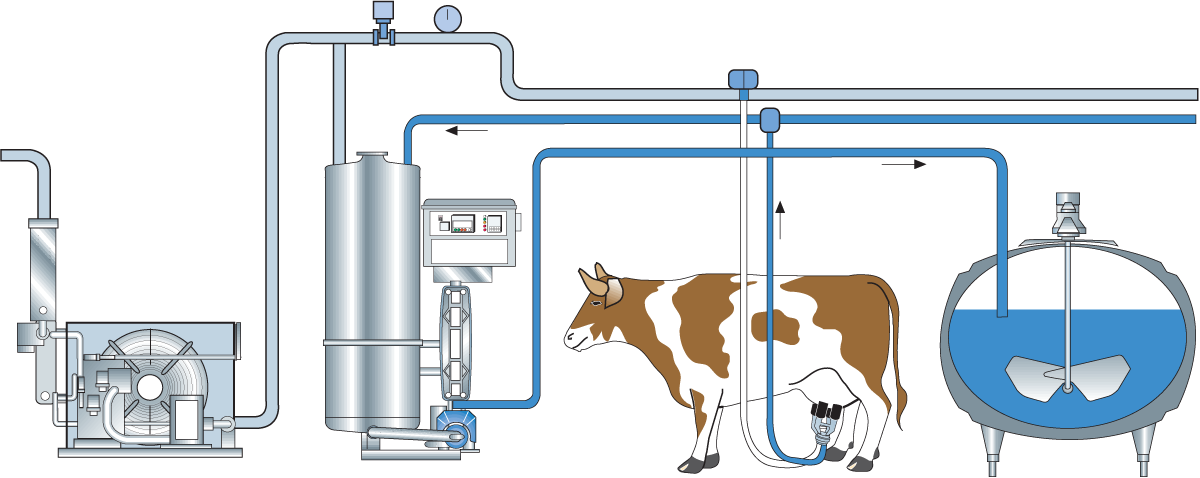
There are different milking systems (bucket, trolley, pipeline, little auto tandem, herringbone or parallel parlors) each of them has a different work routine. The number of cows, the financial resource, the skilled workforce, and the availability of time are parameters influencing the selection of the milking system in addition to stall type and milking system also in small cow dairies. Mechanical milking and dimensioning of cow milking systems with a number of milked up to 100–120 cows.
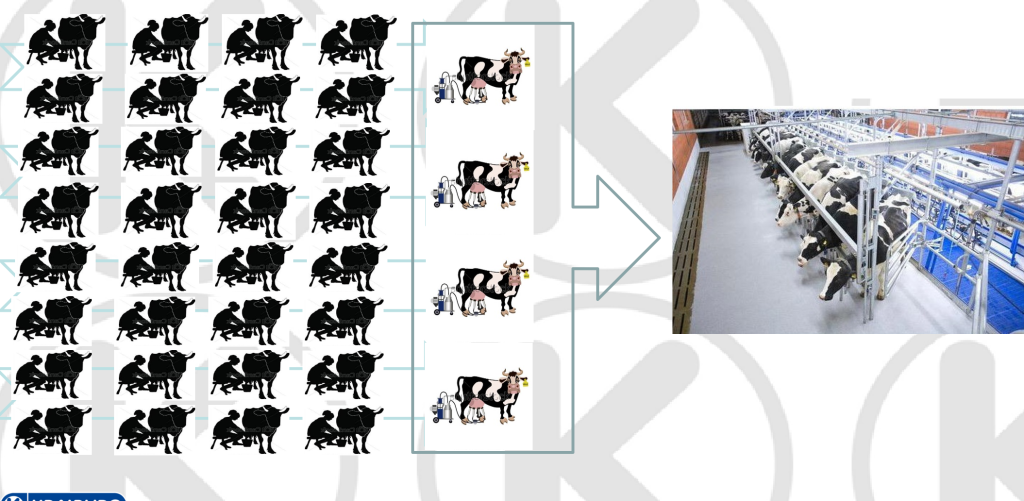
Mechanical milking was at the beginning to increase the efficiency of the milking process to improve milk quality and quantity, and the labor efficiency. The mechanized milking systems also contribute to the operators’ and animals’ welfare, considering the effects on the routine of the milking tasks. The time occurred for both the pre-milking and post milking tasks is essential to determine the number of milking stalls and milking units that a milker can manage in the operation timeframe.
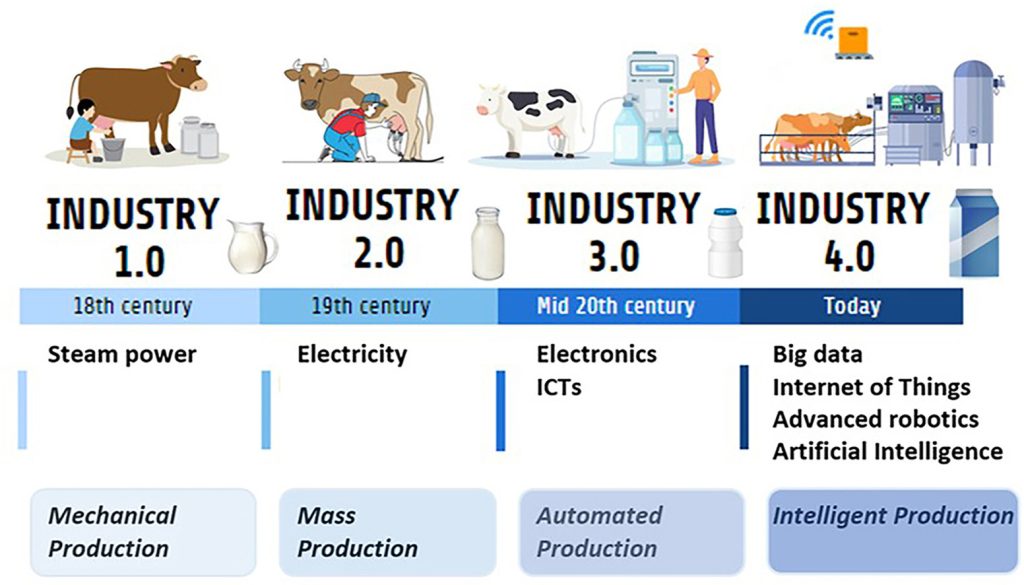
Milking Extraction / Flow Time
The effect of milk flow time on milking performance as the most influencing activity. The milking extraction time of each cow depends on multiple variables: animal milk yield, correct feeding and stimulation during the preparation tasks, the physiologic predisposition of the cow to release milk more or less quickly.
Simulated the milking extraction time, and they found average times around 5–5.5 min however, the milk yield per milked cow increased, thanks to the genetic improvement of the animals, and thereby the milking extraction time increased between 6 and 8 min. The milking extraction time determines the number of cows that the operator can milk per hour.
Preliminary Assumptions
Achieving good and realistic results in milking operations in small cow dairies, both in labor productivity and animal welfare.

Milking cow is not that simple
- Cows need to release the milk * (the correct routine)
- Over milking needs to be minimized * (correct take off setting)
- Cows need to be milked out well enough * (good unit position, correct liner, correct use of support)
- Vacuum level needs to be optimal *(teat ends close direct after milking)
- Mastitis needs to be prevented * (lots of aspects)
The Routine of Milking Cow
The routine is the starting point for assessing the milking determines the number of milked cows per hour. Different milking systems have common tasks (as pre-dipping, inspecting foremilk, udder preparation, attaching teat cups, post-dipping), but in the meantime there are different operations that characterize each specific routine (e.g., animal entry and exit if there is a parlor, bucket, trolley or milking group positioning if tie-stall).
Each milking system has its work routine with specific sequences of operations, there are some common tasks, mostly manually performed by the milker: pre-dipping, inspecting foremilk, udder preparation, attaching teat cups, removing teat cups (if the milking cluster removal is absent), post-dipping (disinfecting teats).
The washing and the maintenance of the milking unit, as well as the transportation of the milk tanks outside the stall at the end of the milking operation in tie-stall, were not considered in the calculation of the routine time
Inspected Milking Systems
The milking time per cow is always equal to the routine time, while the number of milking groups (and, consequently, the number of milked cows) depends on the milk flow time and on the routine time. In herringbone and parallel parlors, in fact, animal entry and pre-dipping are fastened by the group management of the cows.
Milking Parlors
There are many types of parlors, the choice of which depends on the herd size. Parlor type affects building size, cow traffic to and from parlor, milking routine and mechanization level. The number of daily milking is also important. two milking per days are planned and animals are milked every about 12 h (usually at 4:00 and at 16:00). Two milking/day represents a standard situation. because milking time is one of the components that modulates the milk lipolytic system. The swing-over milking system permits the milking unit to shift from one stall to another positioned in front of it, speeding up the milking routine. Proper drainage and ventilation are also essential
Tandem Milking Parlors
Tandem milking parlour is suitable for small herds and buffalo milking. The tandem configuration, characterized by individual boxes and side milking, offers a full-length view of the animal and an independent single-stall milking process. place cows in individual stalls in a row, standing nose-to-tail. These parlour features allow easy and safe human–animal interaction, individual animal attention and single stall higher efficiency, providing a faster milking process and individualized milking.
In this type of parlor, the cows move individually to their milking stalls entering and exiting through gates manually (tandem) or automatically (auto tandem) opened and closed (Figure). The milking operation is performed individually, and cows may have a different milk flow time without affecting the milking routine of the other animals.
Automatic Milking Cluster Removal
Tandem milking parlor you combine comfortable milking in a box setup with tried and tested milking technology. Especially with smaller herds, you can save valuable time while maximizing cow comfort. With optional positioning, the arm supports you, from ergonomic attaching and a good milking cluster fit to gentle milk harvest. Depending on the equipment, the milking control unit monitors the milking routine for you, simultaneously sending the current milking data to the herd management system. The Auto Tandem milking parlor is completely different from other milking parlors. Its range of benefits are particularly suitable for small herds:
The Swing Over milking
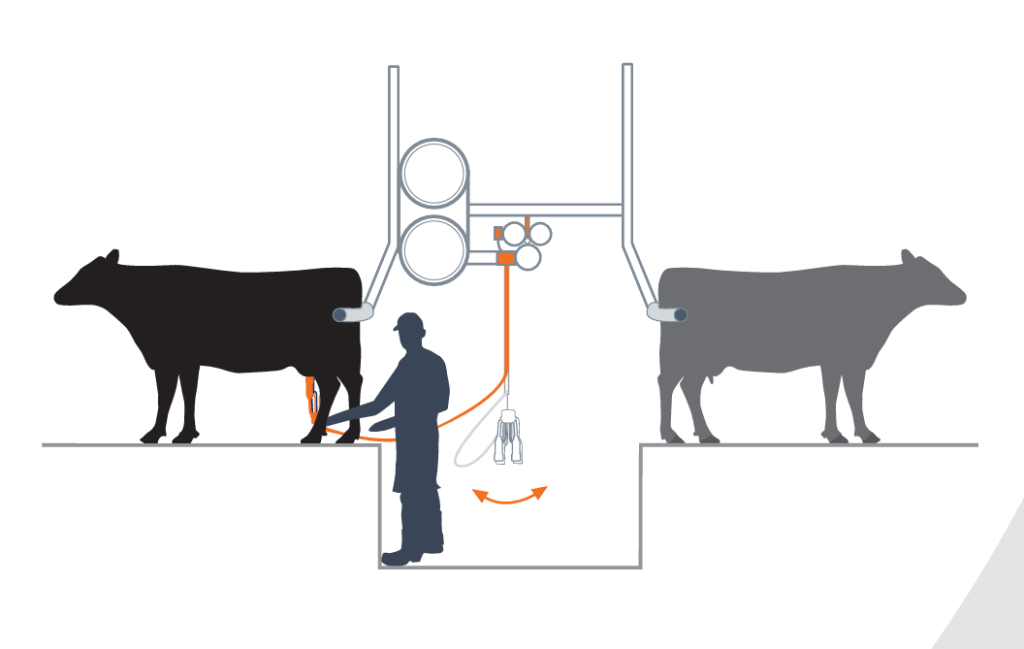
You can take care of two milking stalls opposite one another with only one milking control unit and milking cluster. The double function of the Posi Swing milking arm makes it possible. The basis of this double-sided milking system is the especially compact herringbone milking parlor. While the cow on one side of the milking parlor is milked, you can let the next animal into the other side.
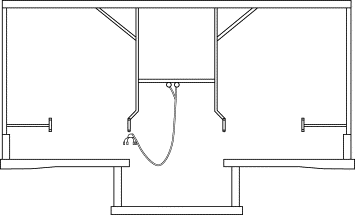
Especially with only one person milking in the parlor, The milking arm is positioned in the middle of the milking pit. When you swing it over to the side where you want to start milking.
The milking arm is positioned in the middle of the milking pit. When you swing it over to the side where you want to start attaching, the vacuum starts. Simultaneously, you instantly have the milking cluster at the ergonomic height you need. The milking control unit takes over milking management for you and sends the herd management system the relevant data on the cow and milking stall. In the meantime, you can switch over to the other side of the group and finalize milking procedures.
The Swing Over milking system is an economically sound investment for small and mid-sized herds. Decreases investment costs. Despite investing less per milking stall, you can still achieve high efficiency thanks to higher productivity and a milking system working continually at high capacity. In addition, you easily save about half the water for rinsing milking clusters as well as half the time for cleaning in the long term.
- Increased throughput and yield
- Better ergonomics for the milker with shorter pathways, meaning the cow and the milking clusters can be reached easily
- Short hose lines and low strength vacuums for better udder health and high milk quality
- Low investment costs as the milking parlor components each serve two milking stalls
- Milking starts automatically when the Posi Swing milking arm swings out.
- You can use the milking control devices to control the entire milking process.
- The gates can be opened and closed from any milking stall via the milking control device, meaning you no longer have to walk unnecessarily to the other gates.
- The milking process beings automatically when the Posi Swing milking arm is controlled using the milking control devices.
- These are connected to the milking management system and provide you with important data to optimize your herd.
Herringbone and Parallel Parlors
In herringbone and parallel parlors, cows are handled in groups. The size varies from 4 × 2 to 30 × 2. Many herringbone and parallel parlors are equipped with rapid-exit stalls (by freeing all cows at once from one side of the parlor in a direction perpendicular to the entry lane, (Figure), which increase the milking parlor efficiency and improve the milking routine.
Initial and final routines are the same as in auto tandem, but the entrance of the animals and the pre-dipping operations take less time, as the operations are sequentially performed (collective animal milking) on two parallel rows. Without swing-over, the number of milking groups. The milking routine in parallel parlors is the same as herringbone, but with a lower entry time of the animals.
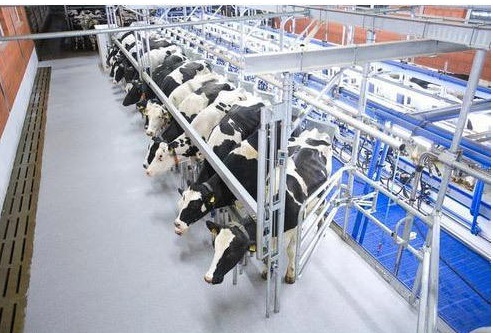
Its open layout makes entering the parlor a stress-free experience. A simple design for the milking stalls that gives the cows greater freedom of movement. The flexible front arm enables the system to automatically index the animals without additional stress. The cows also have a clear view to the front so that they don’t feel trapped. And a more comfortable, relaxed cow produces higher quality milk.